


Plan Template

Get eSignatures done in a snap

Prepare, sign, send, and manage documents from a single cloud-based solution.

What is Plan Template?

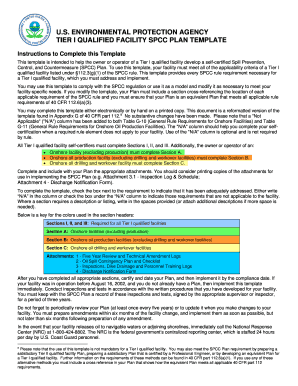
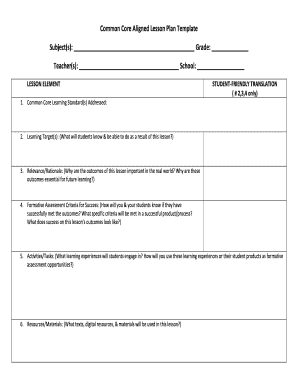
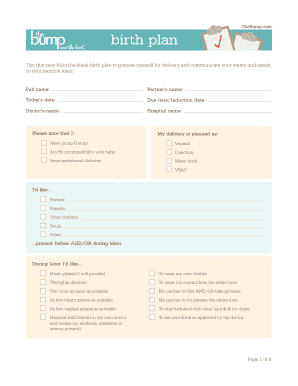
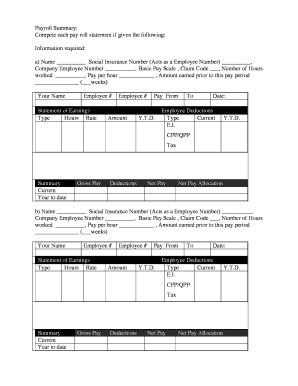
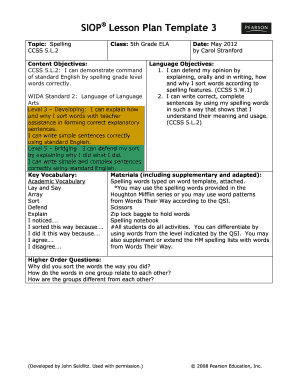
A plan template is a predefined outline or structure that serves as a starting point for creating a plan. It provides a framework and guidance for organizing and documenting the necessary information to accomplish a specific goal or objective. Whether it's a business plan, project plan, or marketing plan, using a plan template can save time and ensure consistency in the planning process.

What are the types of Plan Template?

There are various types of plan templates available to cater to different needs and industries. Some common types of plan templates include:

Business Plan Template
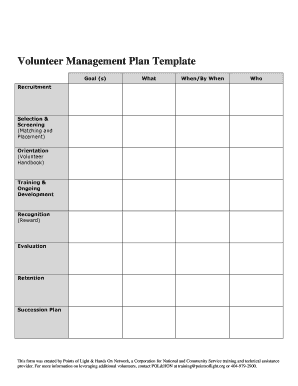
Project Plan Template
Marketing Plan Template
Financial Plan Template
Sales Plan Template
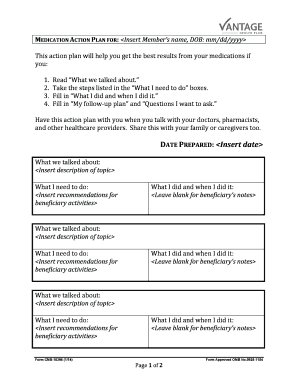
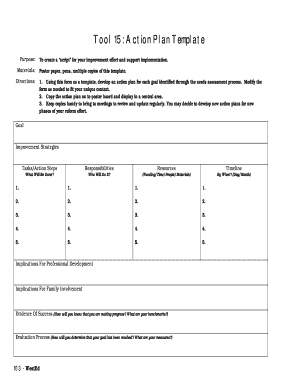
Action Plan Template

How to complete Plan Template

Completing a plan template is a straightforward process that involves the following steps:

01
Identify the purpose and scope of the plan
02
Collect relevant information and data
03
Organize the information into different sections or categories
04
Tailor the template to fit your specific needs
05
Review and revise the completed plan template
06
Share or distribute the finalized plan with relevant stakeholders

pdfFiller empowers users to create, edit, and share documents online. Offering unlimited fillable templates and powerful editing tools, pdfFiller is the only PDF editor users need to get their documents done.
Thousands of positive reviews can’t be wrong

Read more or give pdfFiller a try to experience the benefits for yourself
4.0
It was really hard to find certain features like consolodating multiple PDFS int...
It was really hard to find certain features like consolodating multiple PDFS into one. I also thought the package I bought came with the signature signing option - and apparently it didn't. 180/year is a lot to NOT have that feature. That's the main reason I chose it over others.
Nicki T.
5.0
Our company switched from ******** to PDFfiller about two months ago.
Our company switched from ******** to PDFfiller about two months ago. We took this move seriously, actually, had three in-house experts analyze how price packages correlate with the offered functionalities. Of course, the more you pay, the more extra stuff you get, in both cases. But PDFfiller clearly gives more for a lower price, especially if you need 20+ seats. I am still discovering many little things inside, not enough time for that, but their Support is amazing! Paul, Anna - KUDOS!
Lily T
5.0
Great tool PDF filling out can be tricky so I always use PDF filler No printer o...
Great tool PDF filling out can be tricky so I always use PDF filler No printer or scanning needed Nada no complaints all is what it is meant to be
Jill R.

Questions & answers

It should be no longer than a page, offering a brief overview of: The project objectives and goals. Your chosen project methodology/framework. The final deliverables and acceptance criteria. Key scope risks and countermeasures. Summary of milestones. An overview of the project timeline and schedule-based risks.
Here we'll take a look at seven things that demonstrate the importance of project planning. Well-defined goals. One of the most obvious–and most important– steps of a project plan is defining your project goals. Resource planning. Task planning. Risk identification. Communication. Scheduling. Quality control.
A project plan template is a document that creates a standard format for a project plan. Typically, it contains a list of the essential elements of a project, such as stakeholders, scope, timelines, estimated cost and communication methods.
Project Planning 101: 6 Steps to a Foolproof Project Plan Step 1: Identify and meet with stakeholders. Step 2: Set and prioritize goals. Step 3: Define deliverables. Step 4: Create the project schedule. Step 5: Identify issues and complete a risk assessment. Step 6: Present the project plan to stakeholders.
The three major parts of a project plan are the scope, budget and timeline. They involve the following aspects: Scope. The scope determines what a project team will and will not do.
Let's dive into the details: Step 1: Define your goals and objectives. Step 2: Set success metrics. Step 3: Clarify stakeholders and roles. Step 4: Set your budget. Step 5: Align on milestones, deliverables, and project dependencies. Step 6: Outline your timeline and schedule. Step 7: Share your communication plan.